
Picking the right histology textbooks is about fit, not just prestige
Histology is where anatomy stops being “shape” and starts being “what this thing does.” Most first-year students get overwhelmed by the shelf of options, so they default to whatever their program lists. That works, but it often means you end up with a book that is too dense for your exam style or too basic for your curriculum. Choosing the right histology textbooks is really a decision about three things: whether your course is exam-heavy or practical-heavy, how deep your program expects you to go (basic tissue types versus molecular cell biology), and whether you need an atlas you can study against real slides. This guide breaks the main options down so you can match the book to your actual situation instead of buying by habit.
The three kinds of histology textbooks, and which one you need
Not every histology textbook does the same job. Before comparing titles, sort them into three buckets, because a book that is perfect for one goal can be useless for another.
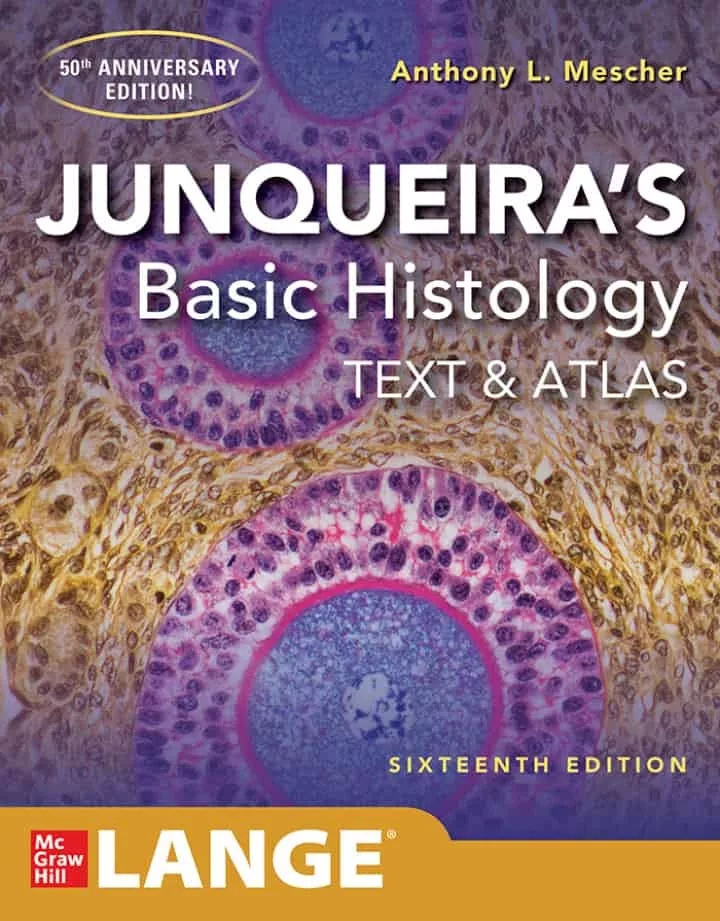
1. Core text + atlas. These are the workhorses. They explain each tissue and organ and pair the text with labelled photomicrographs and illustrations. If your course is a single first-semester subject and your exam is “identify this slide and explain its function,” this is your backbone. Junqueira’s Basic Histology: Text and Atlas is the clearest example in this group, and Histology: A Text and Atlas (Pawlina) is the deeper, more cell-biology-heavy counterpart.
2. Photographic / colour atlas. These are slide-heavy and light on prose. They are the best tool for the practical session where you are actually at the microscope and need to match what you see against a reference photo. Wheater’s Functional Histology sits here — strong on photographs, lighter on the written explanation.
3. Technique and specialty books. These are not for the whole course. They solve one narrow problem: how to prepare and stain a section, or how a specific field (like the oral cavity) differs. Bancroft’s Theory and Practice of Histological Techniques covers the lab-bench side, while Fundamentals of Oral Histology and Physiology is aimed squarely at dental and dental-study readers.
The six best histology textbooks for 2026, and who each one fits
A note on editions: most titles are reprinted every few years. The versions listed here are the current catalogue editions available for download; the differences between the 15th and 16th edition of a text are incremental (updated slides and a few added clinical boxes), so the edition you can access matters more than chasing the newest number.
Junqueira’s Basic Histology: Text and Atlas (16th Edition)
The default recommendation for a first histology course. Independent reviewers (including Kenhub’s textbook review) flag it for being easy to follow, with labelled illustrations, “medical application” boxes, summary tables, and self-assessment questions built in. That makes it a strong single-book choice for exam prep.
Where it does not fit: the same reviewers note the caveats — it can read as too basic for a rigorous graduate or research-track programme, the layout is uneven in places, and it is a large, heavy physical book. If your programme pushes deep molecular cell biology, you will want something heavier.
Histology: A Text and Atlas (Pawlina, 9th Edition)
The “depth” option. It correlates the text with cell and molecular biology and is frequently the one programmes reach for when histology and cell biology are taught as one unit. It is the natural upgrade when Junqueira feels too shallow.
Where it does not fit: because it leans into cell and molecular detail, it is slower reading and more demanding on time. A student whose exam is mostly “identify the slide” rather than “explain the mechanism” may be over-served by it. It is not a thin quick-prep book.
Wheater’s Functional Histology (6th Edition)
The practicals-friendly colour atlas. It is organized around function and loaded with photography, which makes it the companion that pairs well with a core text rather than replacing one. Many programmes (Tulane’s medical-school course guide lists it among its online texts) keep it on the shelf specifically for this role.
Where it does not fit: as a standalone primary text it has less written explanation of “why,” so if your assessment is long-answer rather than slide-ID, it is not enough by itself. Use it next to a prose-heavy book.
Human Microanatomy: Cell, Tissue and Organ Histology with Celebrity Medical Histories
Human Microanatomy is a newer, lighter alternative that threads famous clinical cases through the tissue chapters. It is good for students who learn by story and want the material to stick through narrative rather than through volume.
Where it does not fit: it is not the standard title most exam boards reference, so if your faculty grades against a specific textbook’s chapter list, confirm it actually covers the same scope before swapping. It is a study aid, not always the assigned core.
Bancroft’s Theory and Practice of Histological Techniques (8th Edition)
The lab-skills reference. It explains fixation, processing, sectioning, and staining — the “how did this slide get made” layer that no core text covers in depth. Essential for anyone doing histology practically, not just theoretically.
Where it does not fit: it will not help you pass a tissue-identification exam on its own. It is a techniques manual, so it belongs on the shelf as a second book, not your first.
Fundamentals of Oral Histology and Physiology
The field-specific option for dental, dental-hygiene, and oral-biology readers. If your “histology” is really oral histology — enamel, dentine, pulp, periodontium — this is far more targeted than a general medical text.
Where it does not fit: it is not a general-systems histology book. A medical student needing cardiac, renal, and hepatic tissue will not be covered by it; it is built for the oral and dental curriculum.
Decision guide: match the book to your situation
| Your situation | Start with | Add later | Why |
|---|---|---|---|
| First-semester, exam is mostly “identify the slide” | Junqueira’s Basic Histology | Wheater’s for practicals | Clear prose + labelled illustrations; photos for the microscope session |
| Histology and cell biology taught together; deeper mechanism | Histology: A Text and Atlas (Pawlina) | Bancroft’s for the lab | Cell/molecular correlation; technique layer for hands-on work |
| Programme is dental / oral-biology focused | Fundamentals of Oral Histology and Physiology | Wheater’s for general reference | Targeted to enamel, dentine, pulp, periodontium |
| You learn better from cases and story | Human Microanatomy | Junqueira’s for the formal scope | Narrative aids memory; confirm it matches your exam scope |
| You need to prepare and stain sections yourself | Bancroft’s | Whichever core text your course assigns | Technique-first, not theory-first |
A study strategy that actually works for histology
Two habits separate students who pass histology from those who read it and forget it.
1. Study against real or digital slides, not just the printed page. Histology is a visual-recognition subject. The book’s illustrations are a map, but the exam shows you a photo you have not seen before. Practise naming the tissue and its key cell types from an image before you look at the answer. Several students report the biggest jump came from stopping verbatim note-taking and instead annotating the textbook and running image-recall practice.
2. One structure at a time, function attached. For each tissue, learn three things: the cell types present, what those cells do, and one clinical “so what.” The “medical application” boxes in texts like Junqueira’s are worth doing as flashcards because they map straight to the clinical-vignette questions that dominate exams. Batch sessions around one organ system rather than skimming the whole book at once.
Pair any of the books above with active-recall image quizzes. The depth of your text should match the depth of your exam — buy the heavier book only if the assessment actually goes deeper.
Additional resources
For a curriculum-anchored list of exactly which histology and cell-biology texts medical programmes subscribe to, the Tulane University histology course guide is a useful cross-check. For a hands-on, student-written breakdown of Junqueira’s strengths and limits, see the Kenhub textbook review.
You can also browse full histology and related anatomy collections on our sibling sites WeTextBook and GetUREBook.
Frequently asked questions
What is the best histology textbook for medical students?
For most first-year medical curricula, Junqueira’s Basic Histology: Text and Atlas is the most efficient single choice because it pairs clear prose with labelled images and self-assessments. If your programme folds cell biology into the course, Pawlina’s Histology: A Text and Atlas is the deeper alternative.
Should I study histology from a printed book or an e-book?
For reading and exam prep, a PDF or e-book is usually enough and far cheaper. The one place a printed or colour-optimized atlas still helps is the practical, where you are matching the book to a live slide and want high-fidelity photographs. Many students keep an e-book as the main text and a colour atlas for lab sessions.
Is Wheater’s Functional Histology enough on its own?
Not usually. It is strong on photography and function but light on written explanation, so it works best as a companion to a prose-heavy core text rather than a replacement. Use it if your assessment is image-based and you already have a main textbook.
Which histology book fits a dental or oral-biology programme?
Oral-focused readers are better served by Fundamentals of Oral Histology and Physiology, which concentrates on enamel, dentine, pulp, and the periodontium. A general medical histology text will not cover that field in enough depth on its own.
Do I need a histology techniques book if I am only doing theory?
No. A techniques reference like Bancroft’s matters when you prepare, section, and stain your own slides. If your course is theory-and-exams only, it is a shelf reference at most, not a required purchase.
Start now
Pick the core text that matches your exam depth, add one atlas for practicals, and begin image-recall practice this week. Browse the full verified histology and anatomy e-book collection on eTextBookLib and grab the editions that fit your programme.
Last updated: October 2026.