Choosing the right immunology textbooks matters more than it looks, because the subject spans a wide gap between a first exposure in an undergraduate biology course and the clinical, board-focused version you meet in medical or graduate training. The wrong pick means re-reading a book that is either too shallow for your course or too dense for what you actually need to retain. This guide compares the five titles we most often see on syllabi, shows where each one fits, and helps you pick a core text plus one or two supporting reads instead of over-buying.
Why the textbook you pick depends on where you are
Immunology is one of those subjects where the same word means different things at different levels. A first-year student and a resident preparing for a board exam are reading for completely different reasons. The most common immunology textbooks split into three rough families: comprehensive core texts that try to cover the field end to end, condensed essentials that trim the field to what an undergraduate or pre-med course needs, and clinical references that assume you already know the basics and want to apply them to patients. Match the family to the moment you are in, and the choice becomes much less about which book is “best” and much more about which one your course actually runs on.
The five core titles compared
Here is how the main contenders line up, so you can see where each one sits on the spectrum from beginner-friendly to clinical-depth.
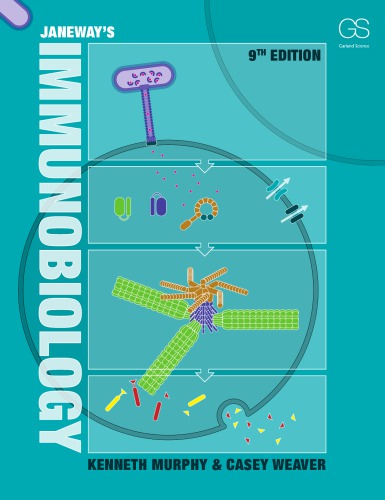
Janeway’s Immunobiology (9th Edition) — the deep, visual reference
Janeway’s Immunobiology is the text that library guides at places like NYU list as the premier immunology text for advanced undergraduate, graduate, and medical students. Its strength is scope and illustration: every major chapter is built around clear figures that make hard processes like T-cell activation and antigen presentation legible. That makes it the natural choice when you want a book you can keep across multiple years and return to as you get deeper. The trade-off is that it is not a light read, and a course that only needs the fundamentals may not justify its length.
Kuby’s Immunology (8th Edition) — structured and exam-oriented
Kuby’s Immunology takes a more organized, question-driven approach and is frequently the backbone for students who need a text that maps cleanly onto course units and self-testing. Where Janeway leans on narrative and figures, Kuby is more systematic and a touch more accessible for people who learn by working through structured sections. It pairs well with an active-recall study plan because the material is chunked in a way that is easy to quiz yourself on.
Roitt’s Essential Immunology (13th Edition) — the condensed foundation
Roitt’s Essential Immunology does what its subtitle promises: it compresses the field into an essentials-first format aimed at students who need a solid but not exhaustive foundation. This is the pick for a first formal encounter with immunology or for a course that explicitly scopes down to core concepts. If your syllabus covers the whole field in depth, you will outgrow it quickly, but as a starting spine it is efficient and clear.
The Immune System (5th Edition, Parham) — a focused, readable companion
Parham’s The Immune System is a well-regarded readable text that sits between the condensed essentials and the full references. It is a good match for students who want more than the bare fundamentals but not the encyclopedic depth of Janeway, and for anyone who wants a second voice that explains the same material differently from their primary text.
How the Immune System Works (6th Edition) — the plain-language primer
How the Immune System Works is exactly what it says: a plain-language walk through the basics. It is the right tool when you are truly new to the subject and need the concepts to click before you touch a dense textbook, or when you want a quick refresher layer under your main course text. It is not a substitute for a core immunology textbook on its own.
Decision table: pick by situation
| Your situation | Start with | Add later | Why |
|---|---|---|---|
| First-ever immunology course (undergrad / pre-med) | Roitt’s Essential Immunology (13th Edition) | How the Immune System Works (6th Edition) if you need a gentler primer | Condensed scope matches a fundamentals-first syllabus without drowning you |
| Medical or graduate program, multi-year reference | Janeway’s Immunobiology (9th Edition) | Kuby’s Immunology (8th Edition) for structured self-testing | Janeway’s depth and figures age well; Kuby adds exam-ready structure |
| Course runs on self-assessment and clear units | Kuby’s Immunology (8th Edition) | The Immune System (5th Edition, Parham) for a second perspective | Kuby’s organized, question-driven format fits active recall |
| Want more depth than essentials but less than full reference | The Immune System (5th Edition, Parham) | Janeway’s Immunobiology (9th Edition) if you outgrow it | Parham is a middle-depth readable that bridges the gap |
| Brand new to the field, confused by the basics | How the Immune System Works (6th Edition) | then move to Roitt’s Essential Immunology (13th Edition) for the formal foundation | Plain-language primer makes concepts land before the dense text |
Where each recommendation does not fit (the honest limits)
Janeway’s Immunobiology is not the right first book if your course only covers the fundamentals this term; its breadth is a strength now but a time cost later when you are juggling a full medical curriculum. Kuby’s Immunology is less ideal as a long-term desktop reference if you specifically want the richest illustrations and figure-driven explanations, because its appeal is its structured, review-friendly organization rather than its visuals. Roitt’s Essential Immunology is a deliberate condensation, so a student in an advanced course that expects depth across the whole field will find it too slim. Parham’s The Immune System is a solid readable companion but is not the primary text for a program that formally prescribes Janeway or Kuby as its backbone. How the Immune System Works is a primer, not a course replacement, so relying on it alone will leave you without the depth a real immunology textbook provides.
A study strategy that fits immunology
Immunology rewards active recall far more than passive re-reading, because the subject is a chain of cascades (signaling, activation, regulation) where one broken link makes the rest feel random. Pick one core text from the table, read each chapter once for meaning, then close the book and reproduce the key pathways from memory before re-reading. A small set of supporting materials beats a large one: one core text, one structured review companion, and a plain-language primer only if the basics are still shaky. That keeps your reading stack shallow enough to actually finish.
Additional resources
For authoritative, course-aligned reading lists that name exactly which texts a program runs on, these are the references we used when building this comparison:
- NYU Medical Student Bookshelf — Immunology: library guide listing Janeway’s Immunobiology as the premier text
- Mayo Clinic (MCASOM) Immunology guide: official & recommended immunology textbooks for first-year students
- Elsevier — Cellular and Molecular Immunology (Abbas): publisher description of the widely used clinical-immunology core text
- Companion subject hubs from our sister sites: WeTextBook and GetUREBook
FAQs about immunology textbooks
Which is the best immunology textbook for a medical student?
For a multi-year medical program, Janeway’s Immunobiology is the most common backbone because of its depth and clear figures. Pair it with Kuby’s Immunology for structured self-testing when your course leans on units and exams.
Is Roitt’s Essential Immunology enough for a first course?
Yes, for a fundamentals-first undergraduate or pre-med course, the condensed essentials format is deliberately scoped to what you need. If your syllabus explicitly covers the whole field in depth, plan to supplement it with a full reference.
How do I choose between two immunology textbooks?
Check which title your syllabus or your program’s library guide actually prescribes before buying anything. Then pick one structured companion for review and keep the stack to at most two books, so you finish reading them.
Do I need a plain-language primer alongside my main immunology textbook?
Only if the basics are still fuzzy. A primer like How the Immune System Works is a useful layer underneath a dense core text, but it is not a substitute and can be dropped once the fundamentals click.
Can one immunology textbook serve both undergrad and medical study?
A deep reference like Janeway’s can, because it is written for advanced undergraduate through medical levels. The condensed essentials titles are better for the earlier stage and will need replacing as the work gets more clinical.
Start now
The whole decision comes down to matching the textbook family to the moment you are in. Pick your core text from the table, add one supporting read at most, and keep a plain-language primer only as a safety layer. Browse the full range of immunology and related science textbooks at etextbooklib.com/ebooks to find your fit and get started.
Last updated: October 2026.